
Lake Garda vs Lake Como: Which is Right for You?
By Global Transfer Italy · Updated 17 September 2026
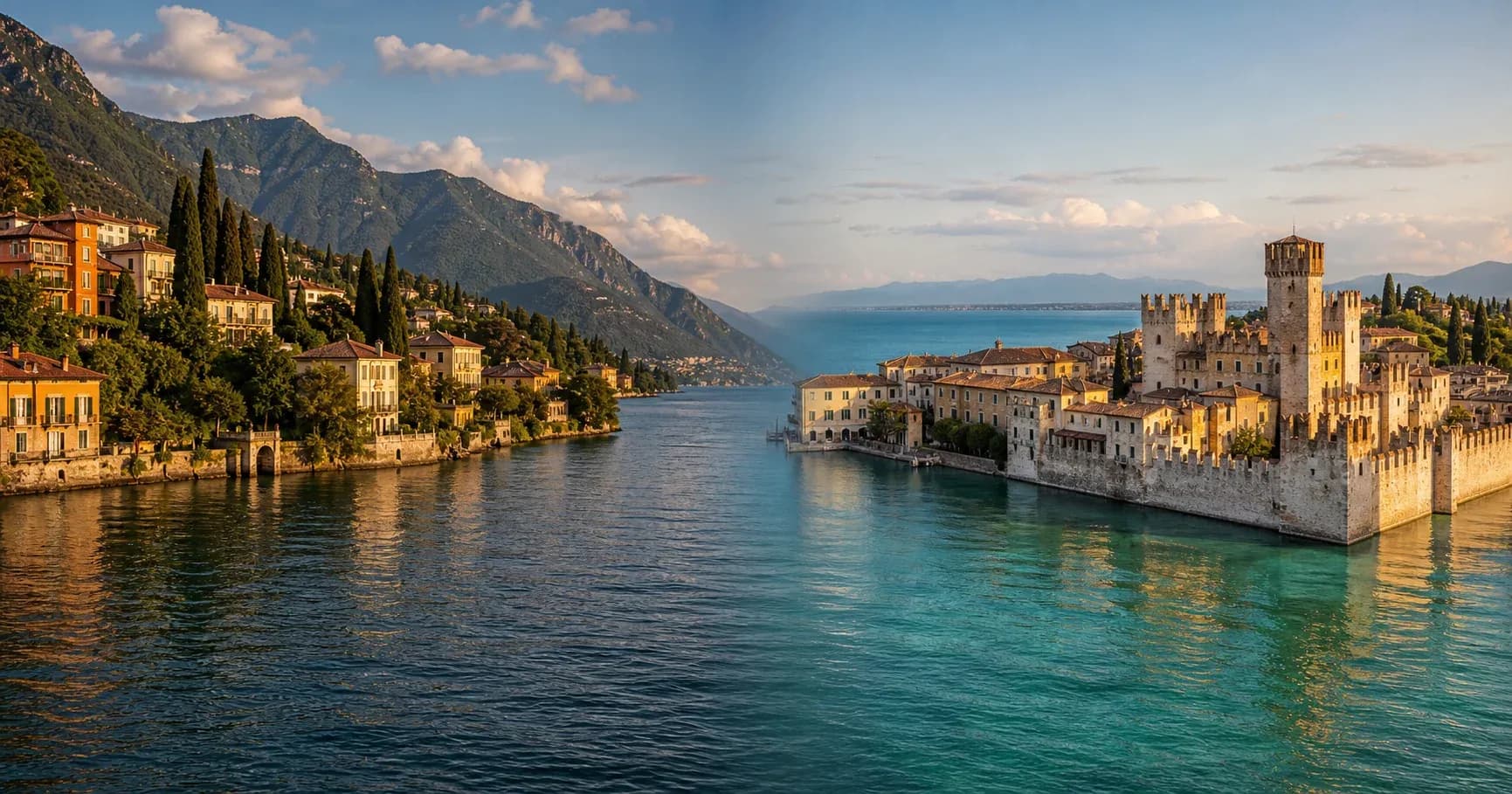
Choose Lake Como for a short stay built around lakeside towns, scenery and boat trips; choose Lake Garda for a longer holiday with more room for different activities. Garda is the larger lake, but the practical distinction is where you stay: its southern shore and mountain-framed north suit different trips. Como often fits a couples’ break more naturally, while Garda gives families more ways to vary the day.
Size matters when planning the day
Neither lake works well as a checklist of places to cover from a single base. Garda’s greater size makes the choice of shore especially important. Staying near Desenzano and staying in Riva del Garda mean different arrival journeys and different local outings.
Como is smaller, but its branching shape makes distance on a map misleading. A town visible across the water is not necessarily a quick drive away. Boats can make sense for visiting other towns, provided the timetable fits the return journey. Pick accommodation around the places you actually want to visit, rather than a general promise of a “lake view”.
The atmosphere beyond the photographs
Como suits days organised around a waterfront walk, a town visit and a long meal. Bellagio fits that kind of itinerary, but the name alone does not guarantee a quiet stay. The location of the accommodation matters as much as the destination.
Garda offers a broader change of setting between its shores. The south lends itself to a town-based lakeside holiday; the north brings mountains more directly into the experience. Couples who want outdoor activities may prefer Garda, while a family happy with gentle sightseeing can enjoy Como. The family-versus-romance distinction is a starting point, not a rule.
Families need a workable base
With children, the useful comparison is often between individual properties rather than entire lakes. Check the walking route to meals, access with a pushchair and whether swimming requires another journey. A waterfront address does not automatically mean suitable access to the water.
- Garda suits a holiday that alternates time by the water, town visits and more active days.
- Como suits a family comfortable with boat journeys and an itinerary centred on exploring towns.
- At either lake, nearby food and manageable walking routes can matter more than a famous postcode.
For couples, the same logic applies: choose Como for a compact sightseeing plan, or Garda when walking and changes of scenery are central to the stay.
Getting there from Malpensa
Compare the actual destination, not simply “Como” against “Garda”. The supplied route estimates put Bellagio at 78 km, around 75 minutes, Desenzano del Garda at 170 km, around 120 minutes, and Riva del Garda at 250 km, around 170 minutes. These are approximate driving times, not guarantees.
Using Global Transfer’s distance rates, rounded to the nearest €5, the following are per vehicle, each way:
- Bellagio: E-Class €185 for up to 3 passengers; V-Class €215 for up to 7.
- Desenzano del Garda: E-Class €370; V-Class €440.
- Riva del Garda: E-Class €530; V-Class €630.
The return direction costs the same; a return journey is an additional booking cost. Free child seats and 1 hour of airport waiting are included. A train journey with connections is usually better value for solo travellers or couples staying near a station. A direct transfer becomes more useful with children, shared costs or accommodation requiring a further local journey.
Match the lake to the length of the stay
For a short break after landing at Malpensa, Como leaves less of the trip tied up in the arrival journey on the routes above. Keep the programme focused on the area around the accommodation rather than trying to circle the lake.
For a longer family holiday, Garda makes sense when the group wants several kinds of day out. Choose the southern shore for a trip centred there; choose Riva because the northern setting is part of the plan, accepting the longer airport drive. The best choice is the lake whose everyday logistics fit the holiday, not the one with the most recognisable photograph.